


What Is a Hydraulic Fitting Supplier?
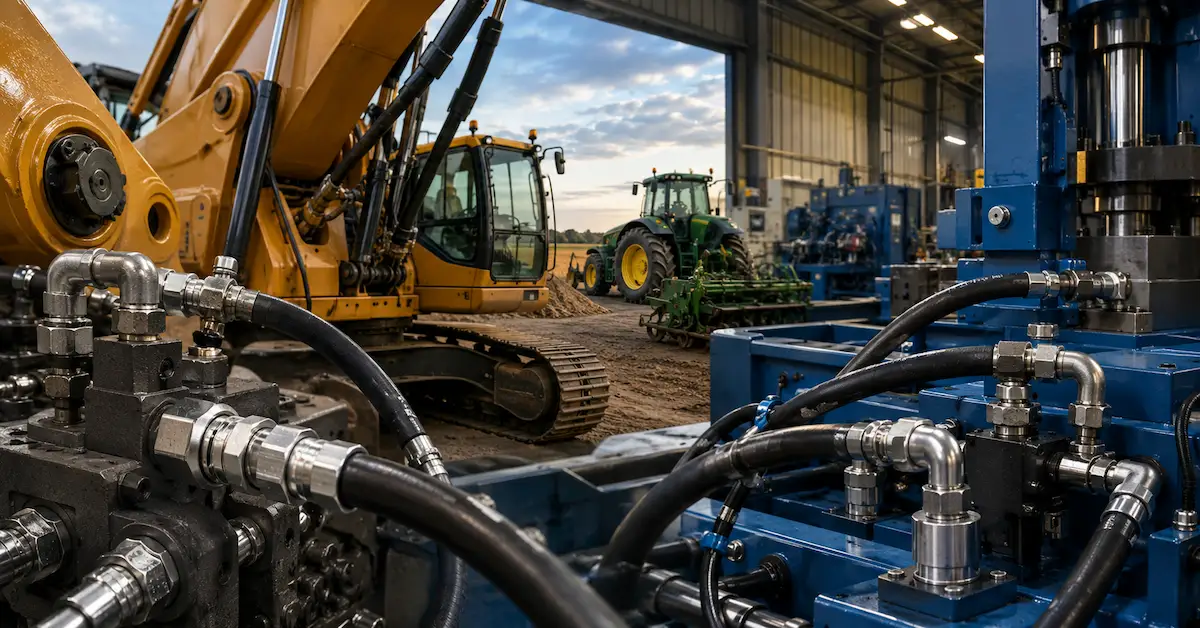
A hydraulic fitting supplier provides connection components used to join hydraulic hoses, pipes, valves, pumps, cylinders, motors, and other hydraulic system components.
Although hydraulic fittings are small components, they play an important role in maintaining hydraulic system performance.
A reliable hydraulic connection must ensure:
- Leak-free operation
- Stable pressure transmission
- Correct fluid flow
- Mechanical reliability
- Easy maintenance
- Long service life
In a complete hydraulic system, components such as pumps, motors, valves, and cylinders create hydraulic power and movement, while fittings ensure that hydraulic fluid can move safely between different components.
Common hydraulic fitting products include:
- Hydraulic hose fittings
- Hydraulic adapters
- Straight fittings
- Elbow fittings
- Tee fittings
- Reducer fittings
- Thread adapters
- Custom hydraulic connectors
For OEM machinery manufacturers and hydraulic system integrators, selecting a suitable hydraulic fitting supplier is not only about purchasing connectors. It requires evaluating compatibility, pressure capability, material quality, manufacturing accuracy, and supply reliability.
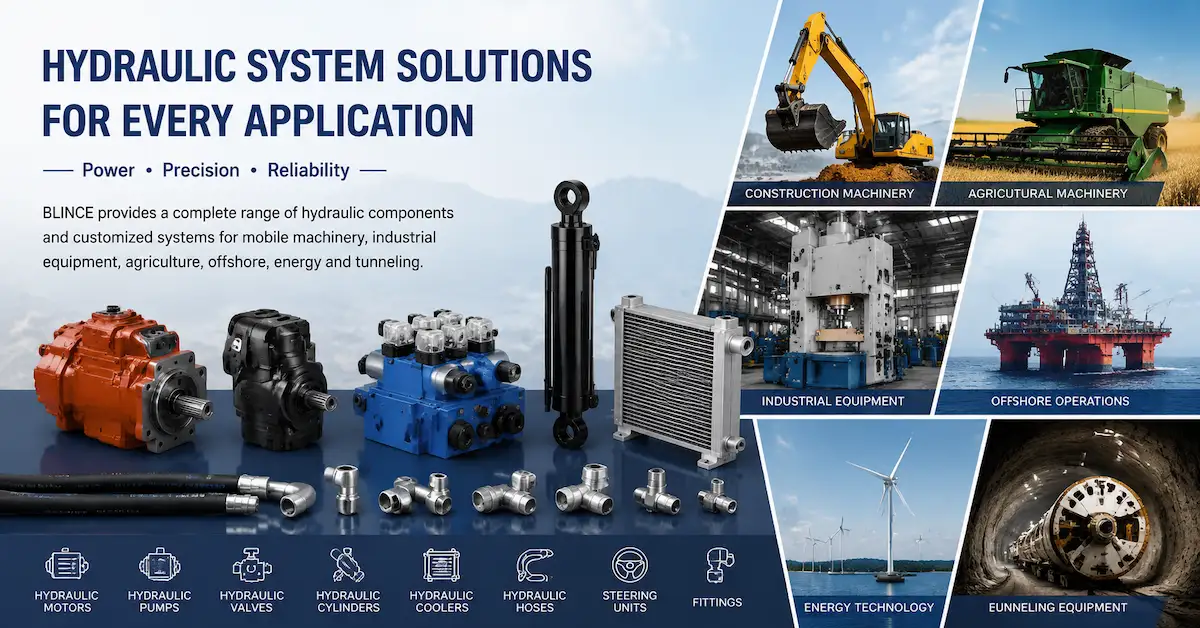
BLINCE provides hydraulic system components and solutions including hydraulic hoses, hydraulic pumps, hydraulic motors, hydraulic valves, and hydraulic cylinders.
Why Are Hydraulic Fittings Important in Hydraulic Systems?
Many buyers focus mainly on major hydraulic components:
- Hydraulic pump
- Hydraulic motor
- Hydraulic valve
- Hydraulic cylinder
However, connection components can directly influence system reliability.
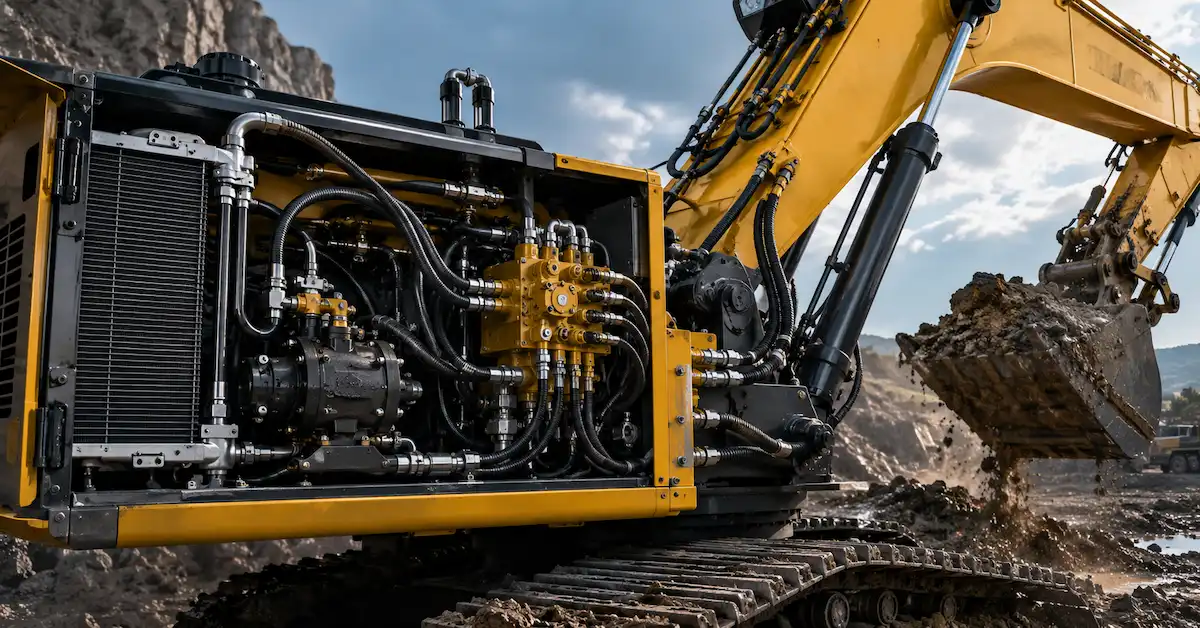
A hydraulic system operates under pressure, vibration, temperature changes, and continuous movement.
Poor-quality fittings may lead to:
- Hydraulic oil leakage
- Pressure loss
- Machine downtime
- Safety risks
- Increased maintenance costs
For example, a hydraulic hose with the correct pressure rating can still fail if the fitting connection is incorrectly selected.
The fitting must match:
- Hose size
- Thread type
- Pressure rating
- Material
- Installation environment
- Hydraulic fluid requirements
Therefore, hydraulic fitting selection should be considered as part of the complete hydraulic system design.
Types of Hydraulic Fittings
Different hydraulic applications require different connection solutions.
Hydraulic Hose Fittings
Hydraulic hose fittings connect flexible hydraulic hoses with other hydraulic components.
They are commonly used in:
- Mobile machinery
- Industrial equipment
- Hydraulic power units
- Agricultural machinery
- Construction equipment
Important selection factors include:
| Factor | Importance |
|---|---|
| Hose size | Ensures correct fluid flow |
| Pressure rating | Prevents connection failure |
| Thread type | Ensures component compatibility |
| Material | Determines durability |
| Installation method | Affects sealing reliability |
BLINCE hydraulic hose solutions support different hydraulic applications where reliable fluid transfer is required.
Learn more about BLINCE hydraulic hose products.
Hydraulic Adapters
Hydraulic adapters are used to connect components with different connection requirements.
Common adapter types include:
- Straight adapters
- 45-degree adapters
- 90-degree elbow adapters
- Tee adapters
- Cross adapters
- Reducer adapters
Adapters help solve installation challenges such as:
- Different thread standards
- Limited installation space
- Direction changes
- Component replacement requirements
For OEM projects,adapter selection can affect:
- Hose routing
- Maintenance accessibility
- System reliability
Hydraulic Thread Standards
One of the most important factors when selecting hydraulic fittings is thread compatibility.
Common hydraulic thread standards include:
| Thread Standard | Common Application |
|---|---|
| SAE | North American hydraulic systems |
| BSP | European and international applications |
| NPT | Industrial hydraulic systems |
| Metric | Machinery and equipment systems |
Incorrect thread selection can cause:
- Leakage
- Installation difficulty
- Seal damage
- Connection failure
A professional hydraulic fitting supplier should understand different international standards and help buyers select suitable connection solutions.
How to Choose the Right Hydraulic Fitting Supplier?
Choosing a supplier requires more than comparing product prices.
OEM buyers should evaluate several key factors.
Check Pressure Rating Capability
Hydraulic systems operate under high pressure.
A suitable fitting must match the system pressure requirements.
Important parameters include:
- Working pressure
- Maximum pressure
- Burst pressure
- Safety factor
For high-pressure hydraulic applications, buyers should confirm that the fitting design and material can handle continuous operation.
A reliable supplier should provide technical specifications instead of only product names.
Evaluate Material Quality
Hydraulic fittings are commonly manufactured using materials such as:
- Carbon steel
- Stainless steel
- Alloy materials
Material selection depends on:
- Operating environment
- Corrosion requirements
- Pressure conditions
- Service life expectations
For example:
Standard industrial equipment may use carbon steel fittings.
Marine or corrosive environments may require higher corrosion resistance.
Review Manufacturing Accuracy
Hydraulic fittings require accurate manufacturing because connection reliability depends on precision.
Important quality factors include:
- Thread accuracy
- Machining tolerance
- Surface treatment
- Sealing surface quality
- Dimensional consistency
Poor machining quality may result in:
- Improper sealing
- Hydraulic leakage
- Installation problems
For OEM customers, consistent manufacturing quality is especially important because repeated production requires stable dimensions.
Confirm Compatibility With Hydraulic Hoses
Hydraulic fittings and hoses must work together.
Before selecting fittings, buyers should confirm:
- Hose inner diameter
- Hose outer diameter
- Working pressure
- Connection type
- Thread specification
- Installation method
A mismatch between hose and fitting may reduce service life or create safety risks.